Environmental Responsibility
Clearing a property creates choices about what can be used again, what can be recycled and what must be managed through an appropriate waste route. We do not make unsupported zero-landfill or recycling-percentage promises.
Reuse where sensible. Classify waste correctly.
An item does not become useless simply because its previous owner no longer needs it. But reuse must be practical, safe and suitable.
We encourage customers to identify furniture they want to retain, sell, donate or relocate before the clearance begins. Where appropriate, serviceable items may have an onward-use option. Whether a donation is possible depends on condition, acceptance criteria, transport and available receiving organisations.
Other materials may be suitable for separate collection or recycling, depending on their composition and the facilities available. A wooden cabinet, upholstered sofa, printer and electrical battery are not interchangeable streams; they can have different acceptance and handling requirements.
For mixed waste loads, accurate descriptions and sensible sorting can be important. We do not promise that every material will be recycled, or imply that processing is guaranteed without evidence from the receiving chain.
Where items are potentially hazardous, unknown or require specialist transport, they must be identified in advance. A general clearance booking does not authorise unrestricted handling of asbestos, chemicals, fuels or other controlled materials.
Why the details of the load matter.
An office clearance may contain serviceable metal filing cabinets, damaged desks with mixed materials, computers that store confidential information and a quantity of packaging. Each should be considered differently. For a house clearance, an upholstered sofa, a battery, a box of books and a container of paint may also need separate decisions. Treating everything as interchangeable general waste is not a responsible plan.
Our enquiry process asks customers to identify electrical items, appliances, chemicals and anything that appears to need special handling. That information helps avoid arriving at a property and discovering materials that cannot lawfully or safely be loaded under the agreed arrangement. A photograph can be useful, but it may not reveal the contents of a sealed container or the condition of a heavy appliance.
We encourage customers to tell us which pieces they wish to retain or potentially pass to another user. A working item may be more valuable when moved directly to its intended destination than when included in a mixed waste load. Equally, materials that are unsafe, damaged or inappropriate for reuse should not be represented as suitable for donation simply because that sounds environmentally positive.
For commercial sites, ask at quotation stage about any documentation you need for an internal audit, landlord handover or sustainability reporting. It is better to agree what evidence can be provided than to assume that informal assurances are the same as measurable recycling results.
Think about the destination before the collection.
1. Retain & reuse
Identify items the customer will keep, move or make available for suitable second use. Condition and acceptance requirements must be considered.
2. Separate & recover
Look at materials such as metals, cardboard and certain timber streams when separation and approved treatment are practicable.
3. Dispose appropriately
Waste that cannot be reused or recovered needs an authorised destination and the correct paperwork where applicable.
What business customers should know.
Waste duty-of-care requirements apply to businesses producing, holding or transferring controlled waste. Customers should understand who is taking the material, whether the relevant authorisation applies and what happens to the waste through the chain.
For non-hazardous commercial waste transfers, appropriate written descriptions and waste transfer information may be required. Different rules can apply to hazardous waste, WEEE and other regulated categories. A project’s paperwork should describe the material accurately and should not be improvised after the fact.
These are reasons to give us an honest and complete inventory. If your site contains suspect asbestos, chemicals, contaminated materials, electrical equipment holding data or other problematic items, raise them at the enquiry stage.
For statutory information, see the government’s Waste Duty of Care Code of Practice. This website offers service information, not a substitute for a client’s own compliance obligations.
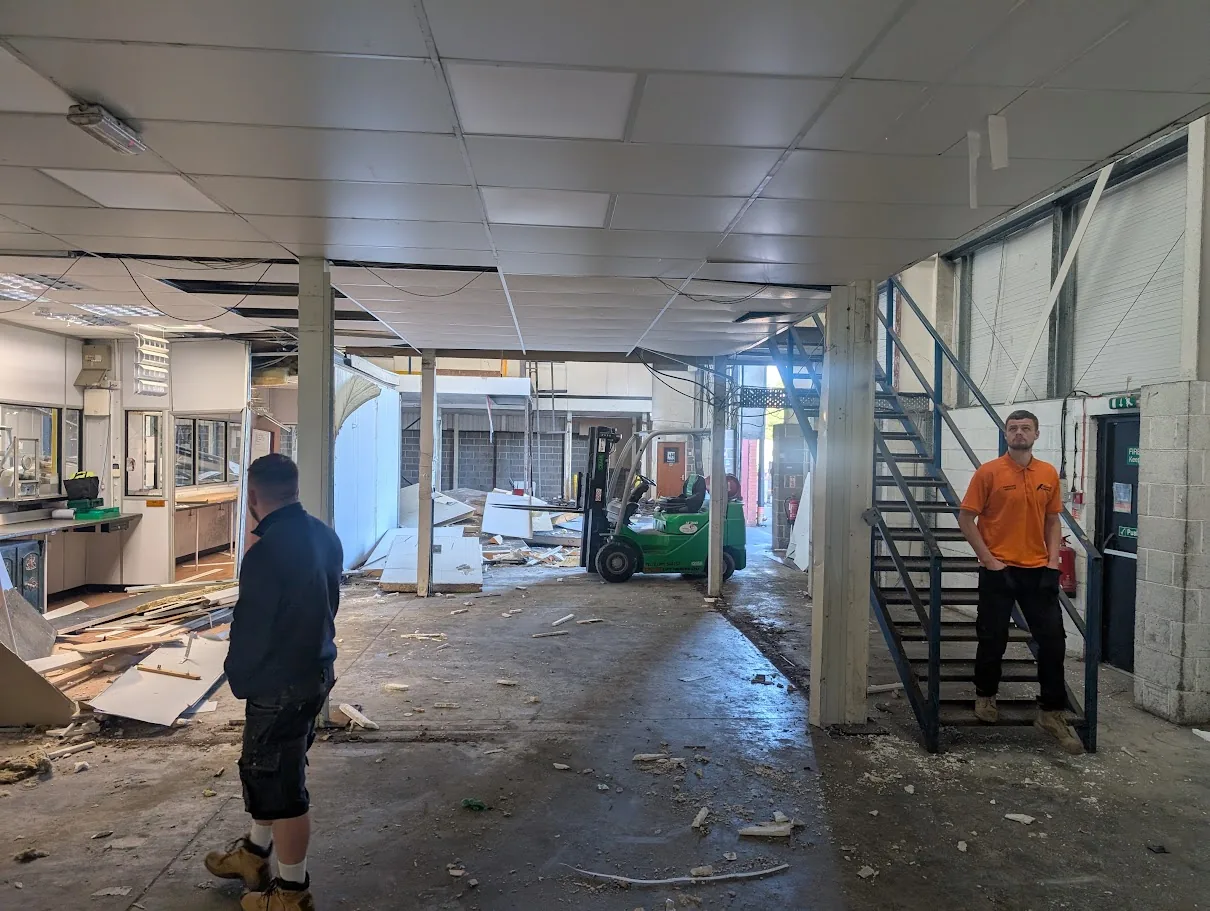
Metal recycling in practice
See photographs from a Sheffield commercial unit strip-out where metal and cable were collected and transported to a licensed scrap metal recycling yard.
Explore the Sheffield projectWhat do you need cleared?
Send photographs, item descriptions and any material concerns. We will discuss the appropriate next steps.