Stairs and landings
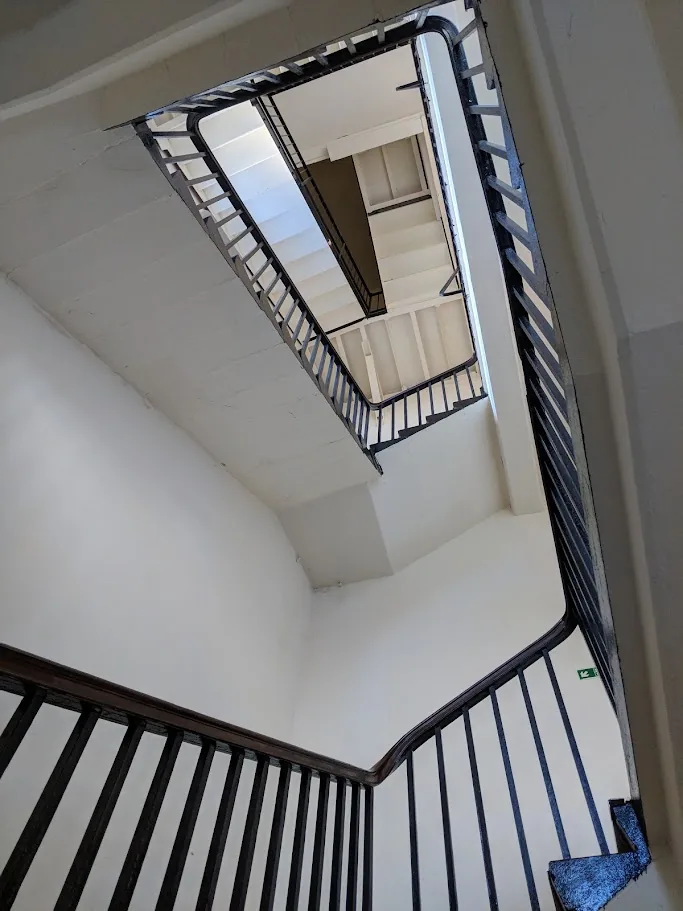
Multiple flights, turns, handrails and restricted widths can dictate how furniture must be carried. Keeping communal passageways and escape routes clear is essential.

Real photographs from a selection of different flat and apartment clearances, showing furniture removal, empty interiors, upper-floor access and the teams behind the work.
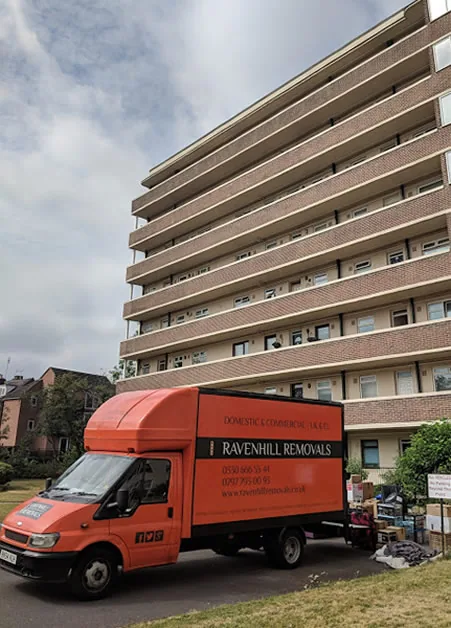
These images are from several separate flat clearance jobs, not one particular address. Together, they illustrate why collecting unwanted furniture and belongings from a ground-floor flat is very different from clearing an apartment several floors up.
A flat may have just a few bulky pieces to remove or several rooms full of furniture, boxes, bags and personal effects. Both need a clear brief, but the layout of the building often determines how the work should be organised.
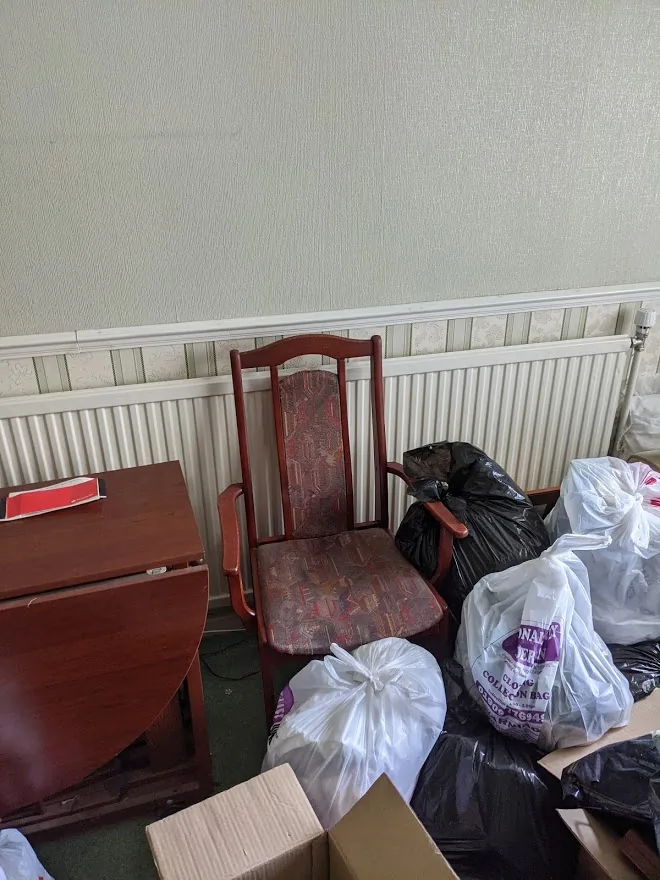
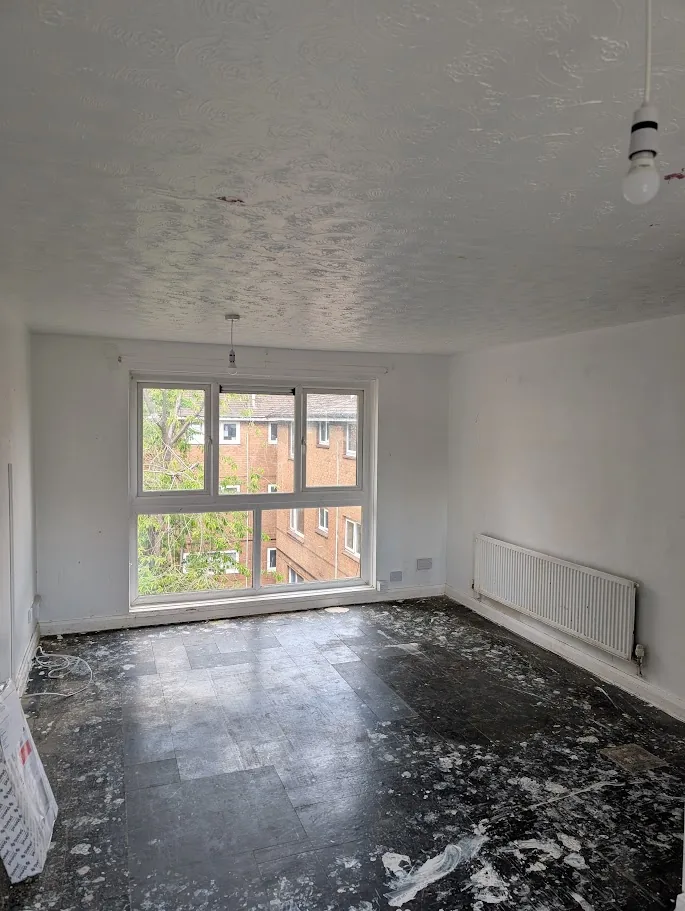
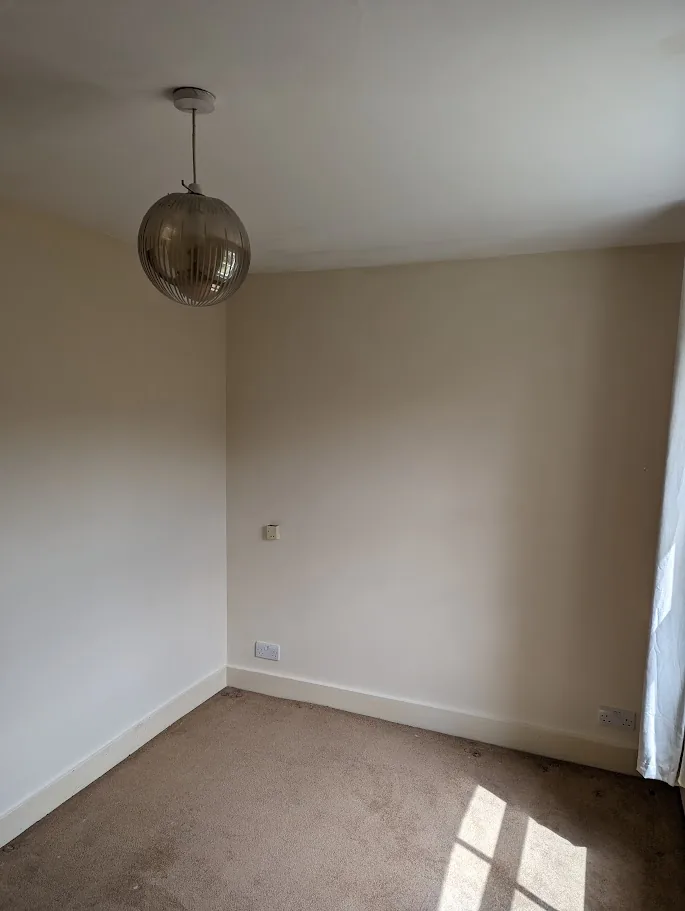
Our photographs show living spaces with furniture and belongings still present, rooms that have been largely emptied, and residential buildings with very different entrances and circulation routes. There is no claim that these are before-and-after pictures of the same property: they are genuine examples from several jobs.
A clearance might involve sofas, tables, chairs, wardrobes, shelving, beds, boxes and other household contents. When a customer contacts us, we ask what needs removing and what must stay. Larger pieces can sometimes require dismantling or special handling before they can be taken safely through the building.
Customers may need a complete apartment emptied ahead of a tenancy change, sale or refurbishment, or they may simply want a few items taken away. A properly agreed list helps us protect anything the owner wants to retain and avoid unnecessary disturbance to other rooms or shared areas.
Landlords, letting agents, family members and managing agents often need a property returned to a usable state at an agreed time. Our focus is the clearance scope and transport arrangements; any cleaning, repairs or specialist waste work should be agreed separately where needed.
These images show the range of conditions we encounter. Some rooms contain furniture and bagged belongings, while others are mostly empty. The photographs come from different assignments and should be viewed as examples of the work, not as a single before-and-after sequence.
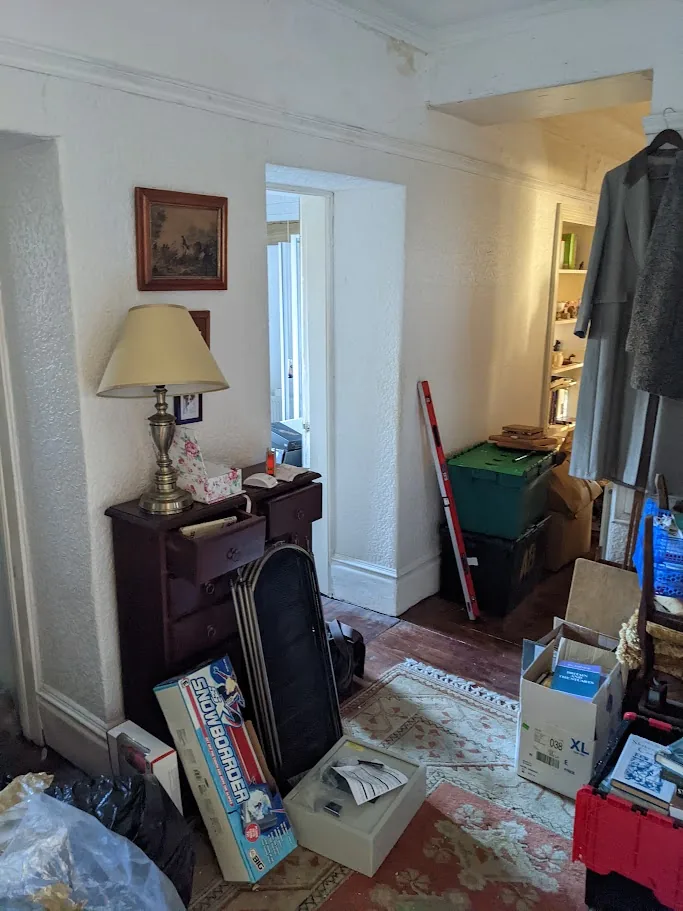
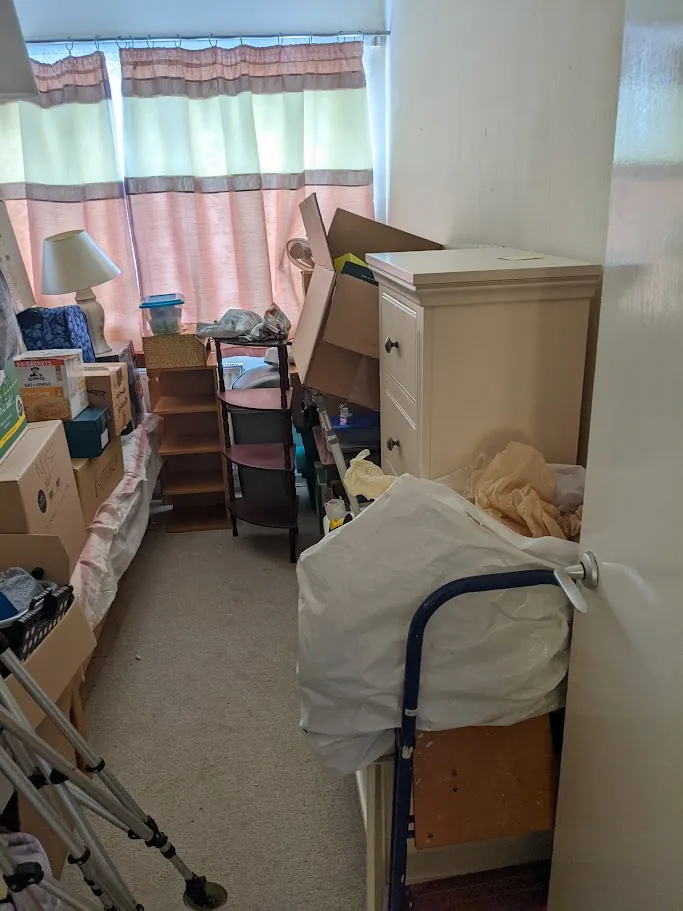
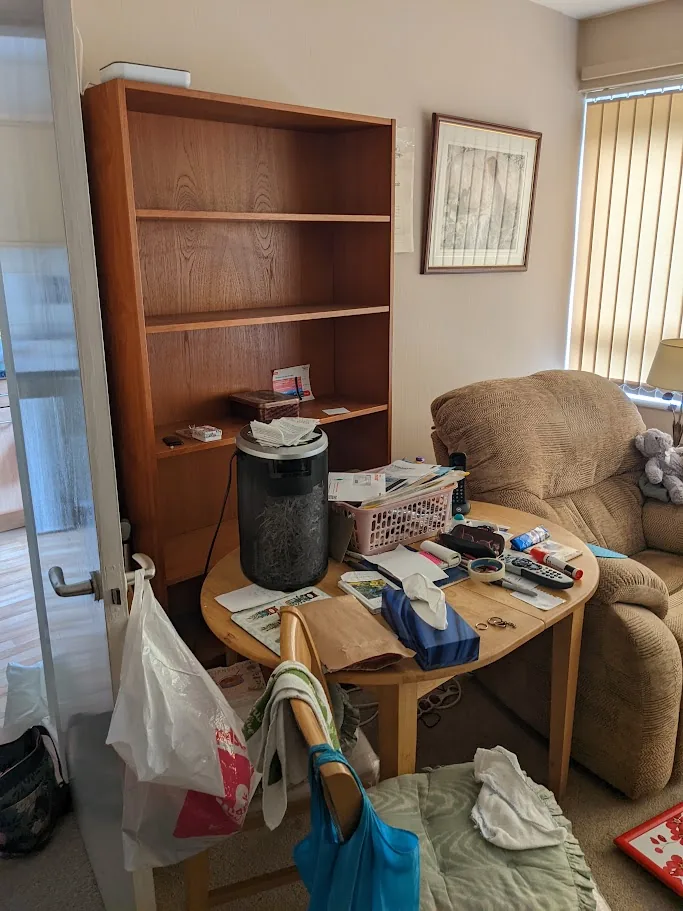
Large items do not always fit into lifts, stairwells or narrow doorways. Access needs to be assessed before the collection, especially when other residents are using the same communal areas.
Multiple flights, turns, handrails and restricted widths can dictate how furniture must be carried. Keeping communal passageways and escape routes clear is essential.
Lift availability, size, weight limits and building management rules can make a big difference. We ask about these details early rather than assuming a lift can be used for bulky items.
Vehicles may have to park some distance from the entrance or work within restricted loading times. The route from the flat to the van affects labour and timescales.
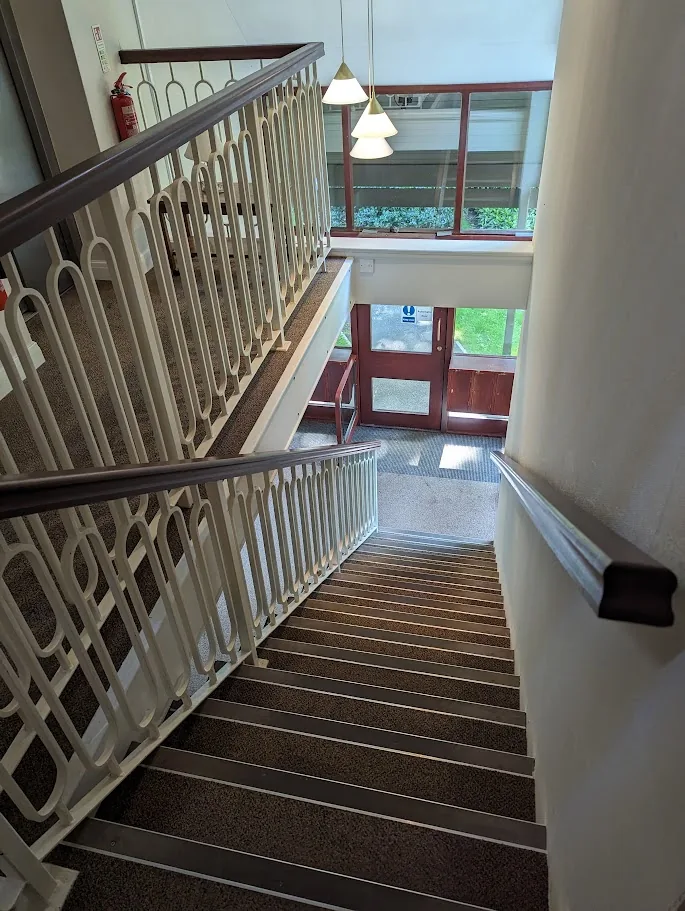
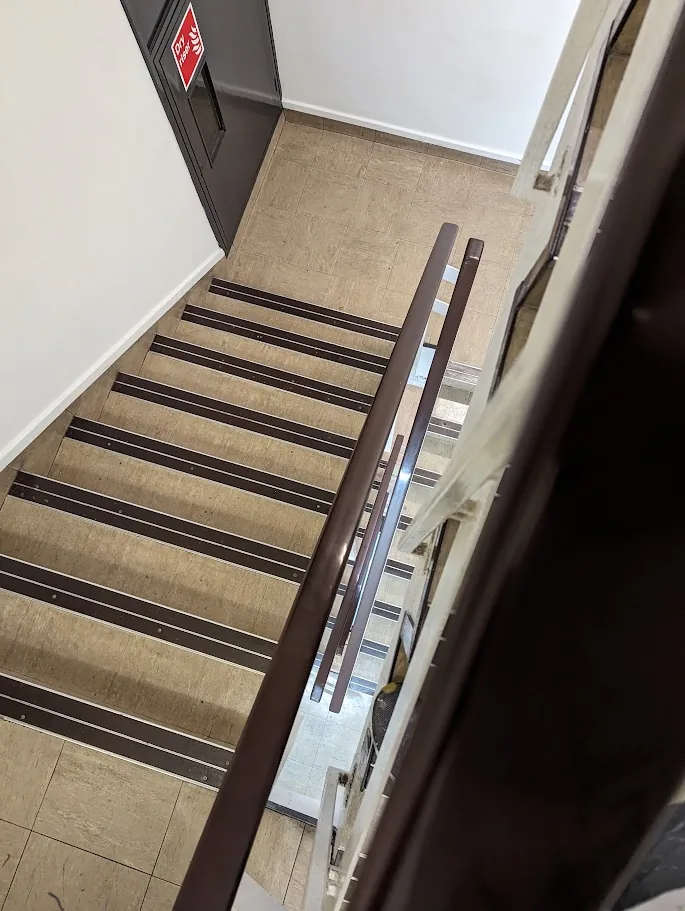
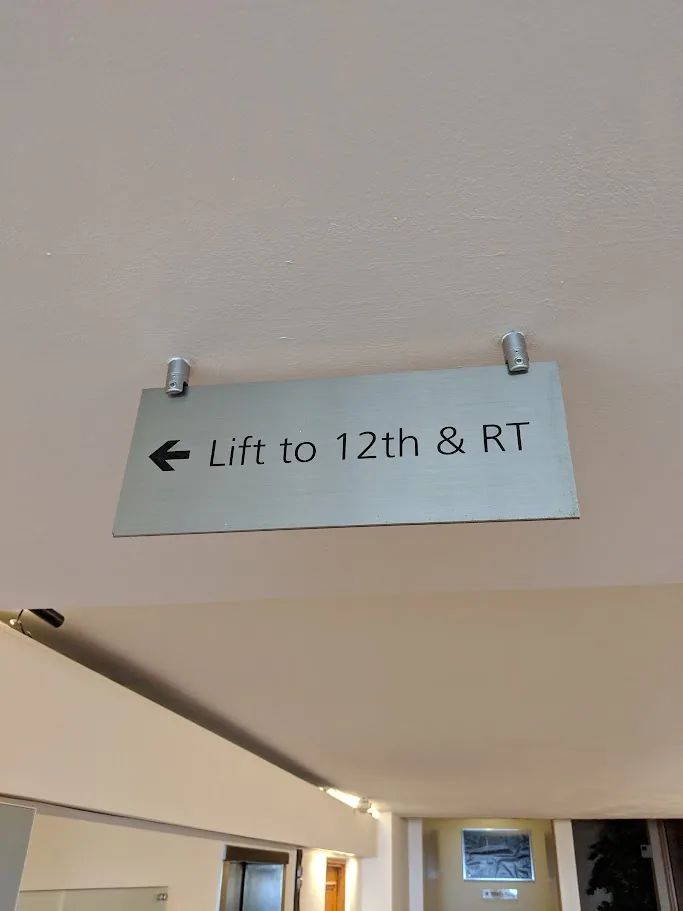
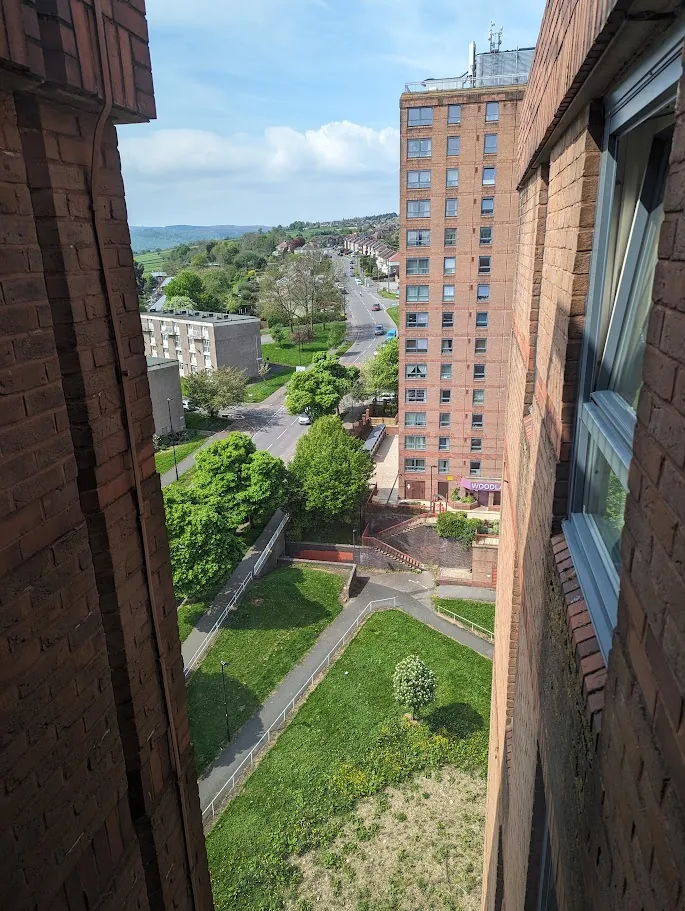
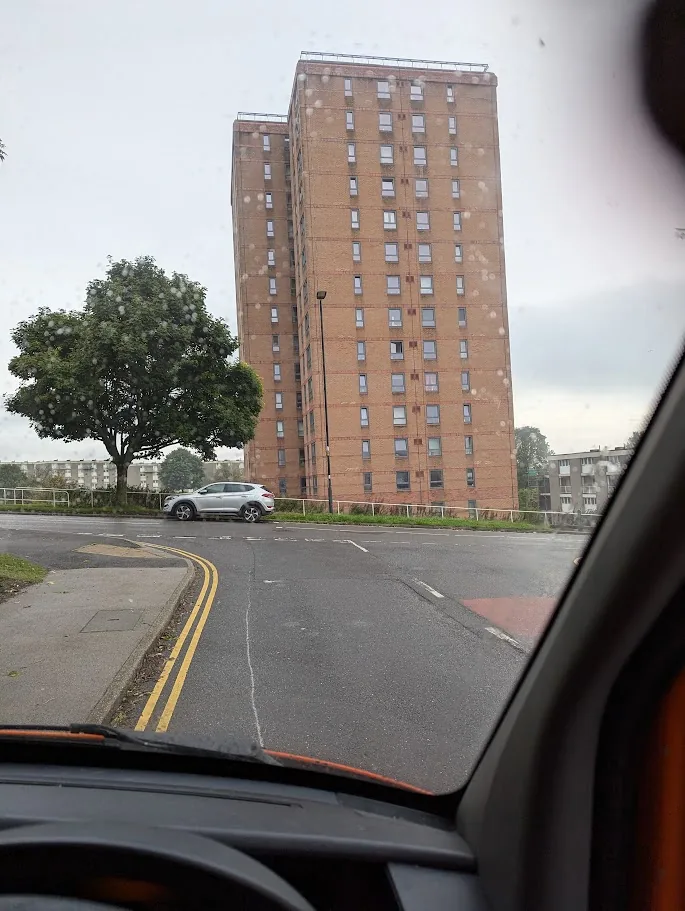
Our crews use suitable vehicles and plan the carrying and loading work around each building. These pictures show some of the people, vehicles and residential settings involved in our clearance work.
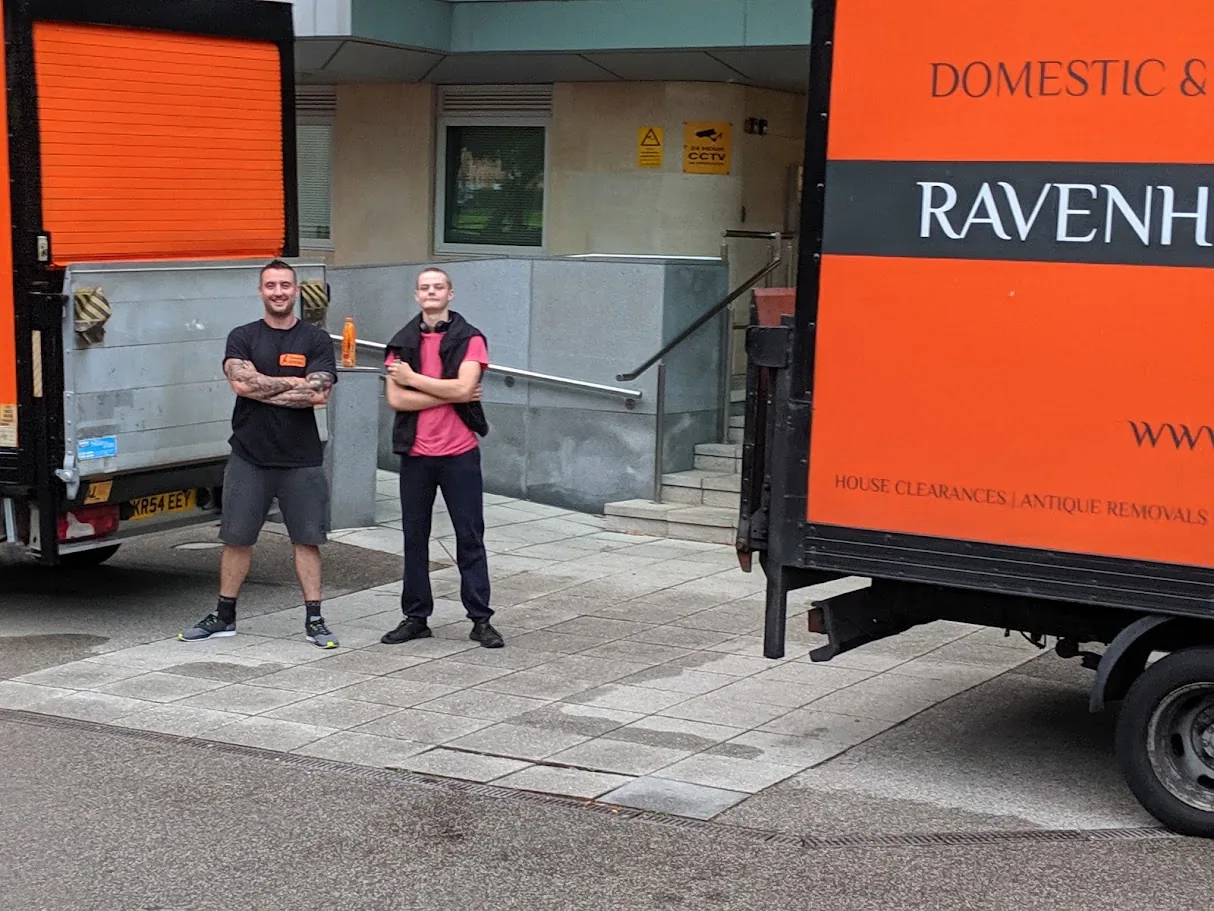
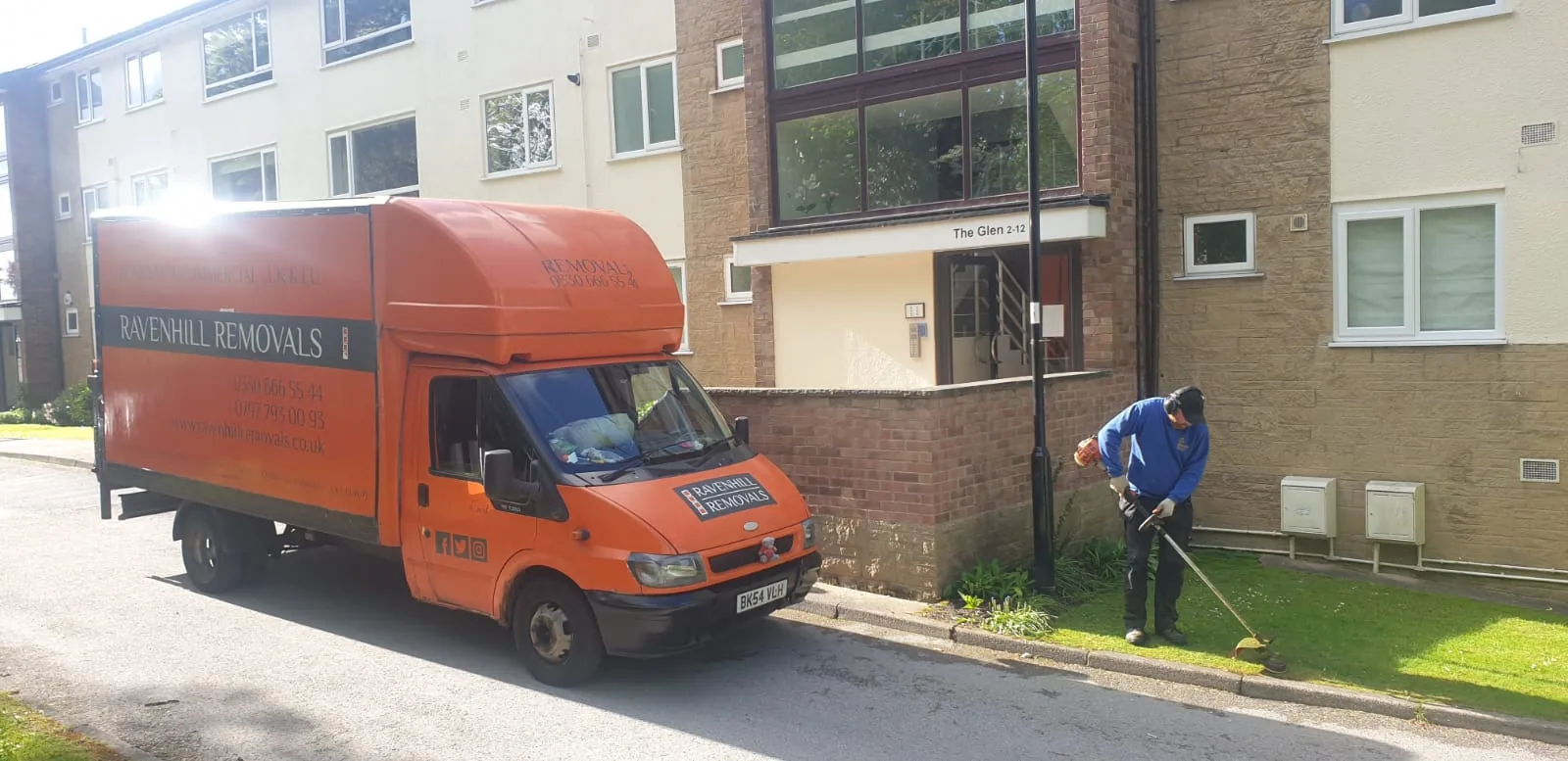
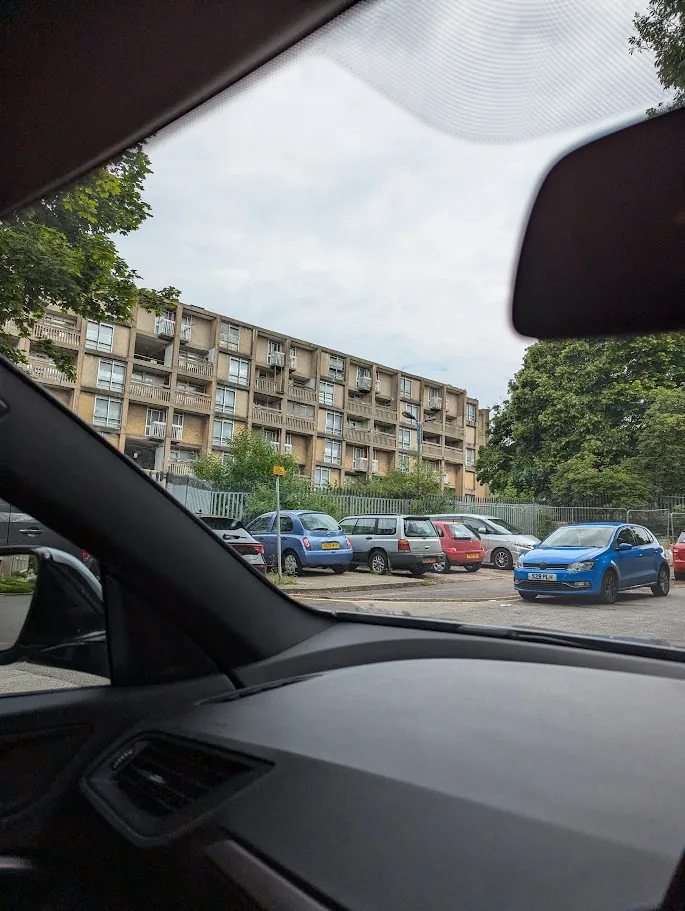
Photographs are taken from several separate projects around Sheffield. They do not imply that all images show the same clearance, the same team or a particular number of floors, vehicles or hours.
Clear information at the outset makes a flat clearance easier to organise for everybody involved.
Confirm the rooms included, the removal list, anything staying in place and the reason for the clearance.
Use photographs or a video survey to assess bulky furniture, overall volume and special handling needs.
Check floor level, lift dimensions, stairs, entrance doors, parking and any working-hour restrictions.
Agree the required people, vehicles and suitable onward handling for the items being collected.
Some of these assignments take place in high-rise blocks; others are in smaller residential developments. A professional flat clearance can support a sale, a new tenancy, refurbishment, downsizing or an agreed property handover.
Where the work is being arranged by a landlord, agent or family member, it is important to confirm who is authorised to request the clearance and whether any belongings or documents need retaining. We recommend that valuables, photographs and personal papers are identified before removal begins.
Items intended for waste, reuse or transport to another address should be made clear during quoting. Waste documentation and any specialist handling arrangements depend on the actual materials and the agreed collection service.
Flat & apartment clearance services ↗We can assess upper-floor jobs. Tell us the floor number, whether a lift is available and any restrictions on moving furniture through communal areas.
Stair-only access can be considered. The number of flights, stair configuration, large items and carrying distance will affect the quote.
Yes, we can discuss selective collections. Make it clear which furniture or belongings are to be removed and which must remain.
We can quote for authorised landlord and property management clearances. The instruction, access arrangements and retained belongings must be agreed clearly.
Share the location, photographs or a video, details of the rooms and bulky items, the floor level, lift or stair access, parking and your preferred date.
Tell us what needs removing and how the property can be accessed. We'll review the requirements and discuss a tailored quotation.