
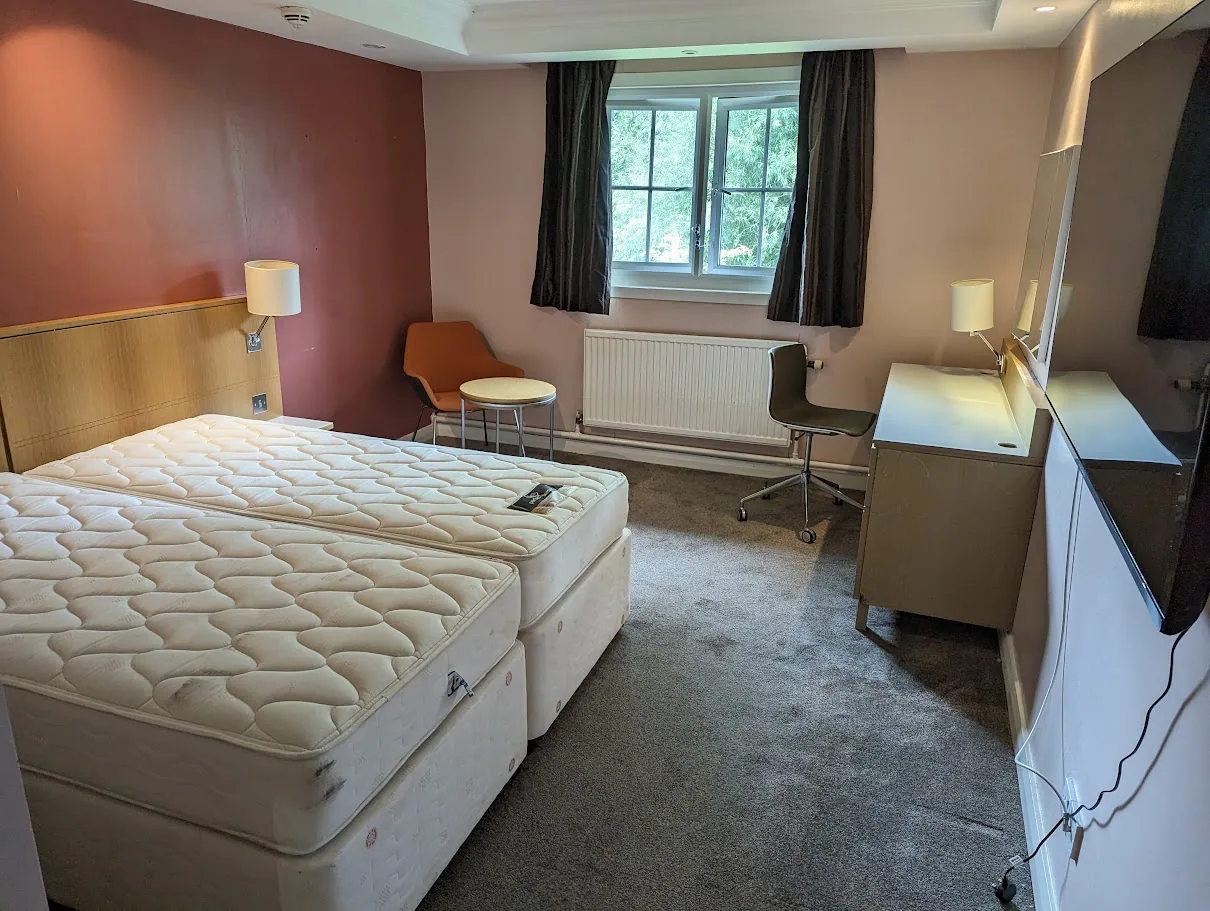
A hotel furniture, fixtures and equipment programme can involve many similar rooms, public spaces and back-of-house areas. Its success depends on a precise inventory and sequencing that works with the refurbishment.
Whether this is your first clearance or part of an ongoing property programme, a well-defined brief is the starting point. The following considerations can help you understand what should be discussed with the people responsible for collection, transport, relocation or waste handling.
Make the inventory room-specific
Start with the furniture package for a representative bedroom: beds, mattresses, bedside units, wardrobes, desks, chairs, mirrors and approved loose equipment. Then record any variations between room categories, suites and accessible rooms. Public spaces need their own lists; reception, dining, meeting rooms and lounges often contain entirely different materials and dimensions.
Decide whether the hotel remains operational
A closed hotel offers different access from a live hotel with guests or staff still on site. In occupied premises, protect agreed routes and consider lift allocations, room availability, working times and security rules. A phased floor-by-floor programme can avoid storing cleared furniture in corridors or blocking fire routes, but it needs careful coordination with the refurbishment schedule.
Clarify fixed versus loose items
A FF&E schedule can contain both easily moved furniture and fixtures connected to a building. Electrical disconnection, fixed-service removal, structural work and hazardous materials are not automatically routine furniture clearance. Identify who will isolate or dismantle specialist elements before the clearance team arrives. Do not assume every fitting shown in a design schedule can be removed without additional trades.
Plan transport and onward handling
Hotel furniture can be bulky, upholstered or heavy. Quantity, loading distance, available vehicles and any secondary destination should be reflected in the quotation. Suitable reuse may be possible for some furniture, but acceptance depends on condition and demand. Ask the provider to explain how different waste categories will be dealt with rather than rely on blanket recycling claims.
The value of a sample room
For a repeated hotel bedroom layout, clearing or measuring one representative room can reveal more than a long generic furniture list. It can identify awkward wardrobes, mattress sizes, narrow doors and the number of individual carries required per room. Any differences between standard rooms and suites should then be added to the schedule. This is particularly useful where a refurbishment programme moves rapidly from floor to floor and there is little room for accumulated furniture in corridors.
Practical checklist
Before arranging collection, use these points to check that the essential details have been identified and shared with the responsible people:
- Record quantities by room type and floor.
- Confirm whether areas remain guest-facing.
- Identify fixed elements that need separate contractors.
- Agree loading routes, phased dates and the fate of the furniture.
Turning the plan into a clearance quotation
The next step is to translate your notes into a description of the actual property, the contents to be removed and any deadline or site constraint. If photographs do not fully explain the situation, request a further discussion or survey. Make sure there is no confusion between removing unwanted material and transporting an item for continued use.
Ask about specialist or excluded materials at the beginning. Where waste is involved, ensure the proposed handling matches the material and the relevant duties. For service details, read our Hotel Clearances page.