
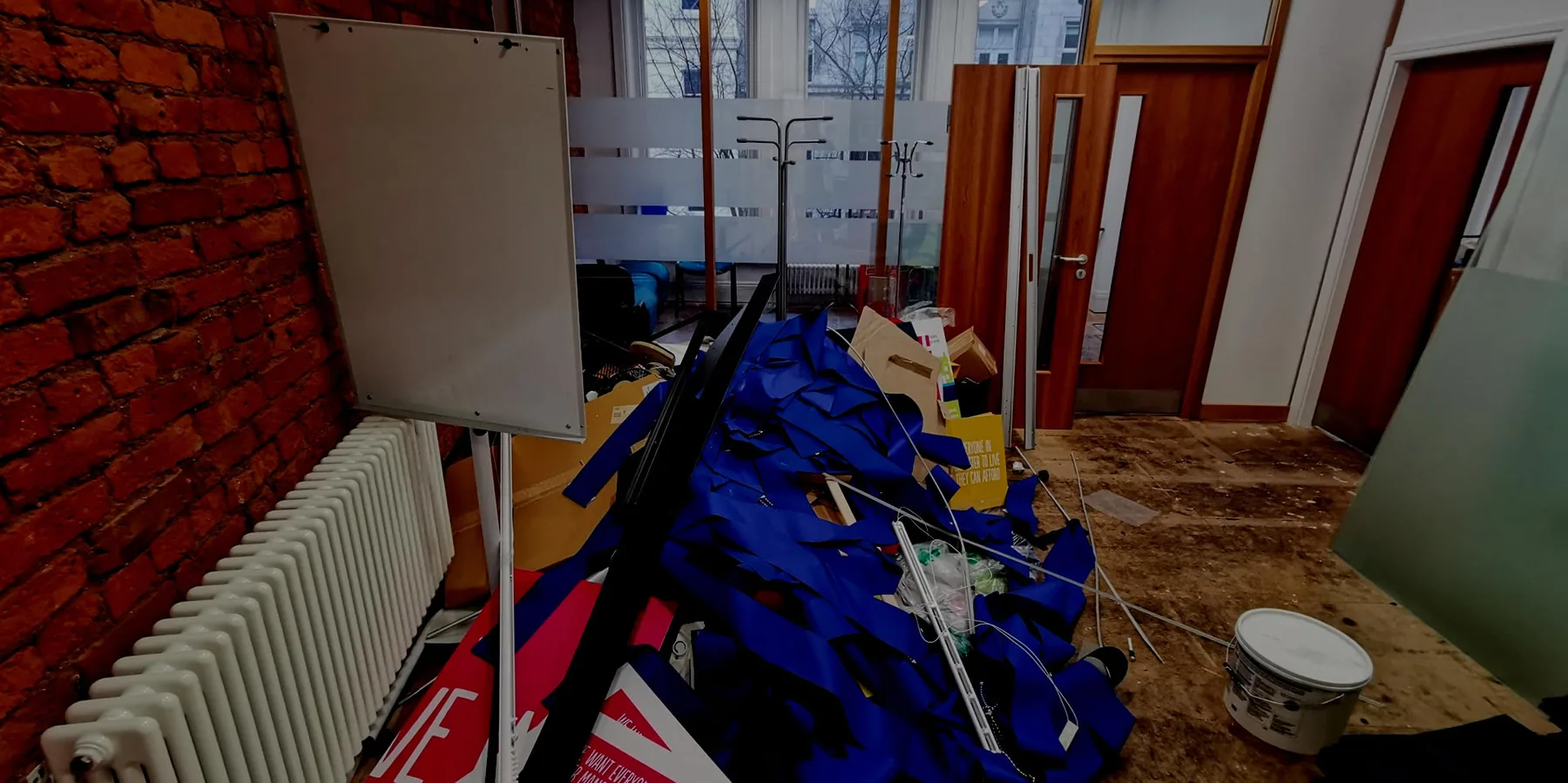
When a business is moving premises, unwanted furniture can become mixed up with stock, documents and equipment needed at the new address. A clear plan avoids removing the wrong items and reduces pressure on moving day.
Whether this is your first clearance or part of an ongoing property programme, a well-defined brief is the starting point. The following considerations can help you understand what should be discussed with the people responsible for collection, transport, relocation or waste handling.
Separate the three types of contents
Create simple categories: items moving to the new premises, items being retained temporarily or stored, and items approved for clearance. Clearly label each group and give copies of the inventory to relevant staff. Do not assume an empty cupboard is waste: documents and small items may be tucked out of sight. Security-sensitive material should have its own controlled handling plan.
Work backwards from the handover date
A lease exit, refurbishment start or new tenant’s arrival can be a fixed deadline. Leave time for furniture removal, any additional cleaning and the final property inspection. If furniture deliveries and removal contractors need the same loading bay, coordinate slots in advance. Check when keys will be surrendered and who can provide access after the main office move.
Set access and communication rules
Agree who has authority to approve additional items for removal, where vehicles can load and what happens if a lift is unavailable. In shared premises, notify the building manager and consider noise or movement around other tenants. Make sure the person attending site knows which rooms are included and which areas must remain untouched.
Do not overlook waste and data
Electronic equipment, paper records and batteries need appropriate decisions. Computer disposal does not automatically amount to certified data destruction; arrange data sanitisation or a verified specialist service where necessary. Ask for the relevant waste-handling documentation and keep important transfer records with your move project file.
What to do in the final week
In the final week before moving, nominate a decision-maker who can answer questions about unlabelled furniture. Photograph each floor after staff have removed personal items and before the clearance crew begins. Check that doors, lifts and fire routes will remain clear during the work. Once the old premises are empty, inspect the spaces against the handover requirements; the clearance team should not be expected to decide whether a lease obligation has been satisfied.
Practical checklist
Before arranging collection, use these points to check that the essential details have been identified and shared with the responsible people:
- Identify items by keep, move, store or clear.
- Agree your building access and lift bookings.
- Confirm arrangements for confidential information.
- Schedule clearance before the final handover inspection.
Turning the plan into a clearance quotation
The next step is to translate your notes into a description of the actual property, the contents to be removed and any deadline or site constraint. If photographs do not fully explain the situation, request a further discussion or survey. Make sure there is no confusion between removing unwanted material and transporting an item for continued use.
Ask about specialist or excluded materials at the beginning. Where waste is involved, ensure the proposed handling matches the material and the relevant duties. For service details, read our Business Relocation Clearances page.