
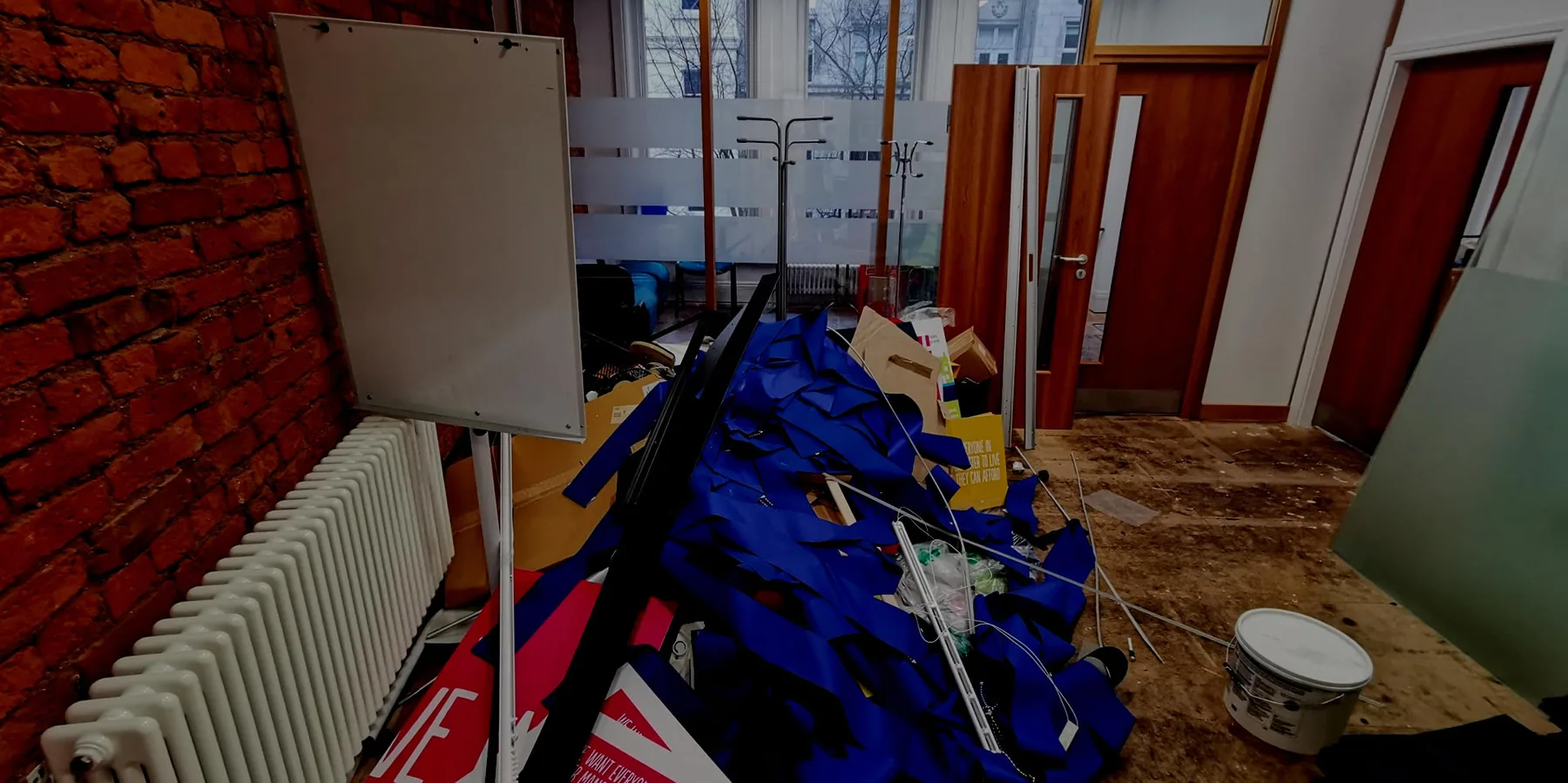
A sound office clearance quote starts with more than counting desks. Access, working hours, disposal requirements and the difference between relocation and waste each change the resources needed.
Whether this is your first clearance or part of an ongoing property programme, a well-defined brief is the starting point. The following considerations can help you understand what should be discussed with the people responsible for collection, transport, relocation or waste handling.
Start with an accurate inventory
Record the number of desks, chairs, cabinets, tables, cupboards, storage systems and boxed contents. Add photographs of large or unusual pieces, as well as areas such as basements and store rooms. A single floor of lightweight chairs is very different from upper-floor filing cabinets and large modular workstations. If you know that some furniture will move to another office, label it separately: removal for reuse and disposal should not be confused.
Look at the building, not only the contents
Goods lifts, shared reception areas, loading bays, parking restrictions and stairs can all influence the team size and loading time. A city-centre office that permits collection only during booked windows may require a different programme to a ground-floor unit with a private yard. Ask the building manager what access permissions apply and whether any protection is required along the carrying route.
Consider what happens after the items leave
Electrical equipment should be identified separately, especially computers, monitors, printers and equipment with batteries. General office furniture may have reuse potential, but that depends on condition and actual acceptance options. Material classification and the appropriate destination matter. A quote should be clear about included removal work and any identified exclusions or additional arrangements.
Compare like-for-like proposals
When comparing quotations, check whether each supplier has priced the same rooms, floors, furniture and disposal responsibilities. Ask whether dismantling, multiple loads, waiting time, unusual waste items and any site-specific requirements are included. An unusually low figure based on incomplete information may be less useful than a realistic and clearly scoped quotation.
Questions worth asking the quoting contractor
Ask whether the proposal includes dismantling, removal from upper floors and any waiting time imposed by the building. Check how bulky items and WEEE are classified and whether the quoted work takes place inside or outside normal business hours. If the property must be ready for a new tenant on a fixed date, confirm that deadline in writing. These questions make a price comparison meaningful and help expose different assumptions before you select a supplier.
Practical checklist
Before arranging collection, use these points to check that the essential details have been identified and shared with the responsible people:
- Prepare an item list, including any bulky pieces.
- Check floor level, lift access and loading permissions.
- Identify what is moving rather than becoming waste.
- Share photographs, a proposed deadline and any site restrictions.
Turning the plan into a clearance quotation
The next step is to translate your notes into a description of the actual property, the contents to be removed and any deadline or site constraint. If photographs do not fully explain the situation, request a further discussion or survey. Make sure there is no confusion between removing unwanted material and transporting an item for continued use.
Ask about specialist or excluded materials at the beginning. Where waste is involved, ensure the proposed handling matches the material and the relevant duties. For service details, read our Office Clearances page.